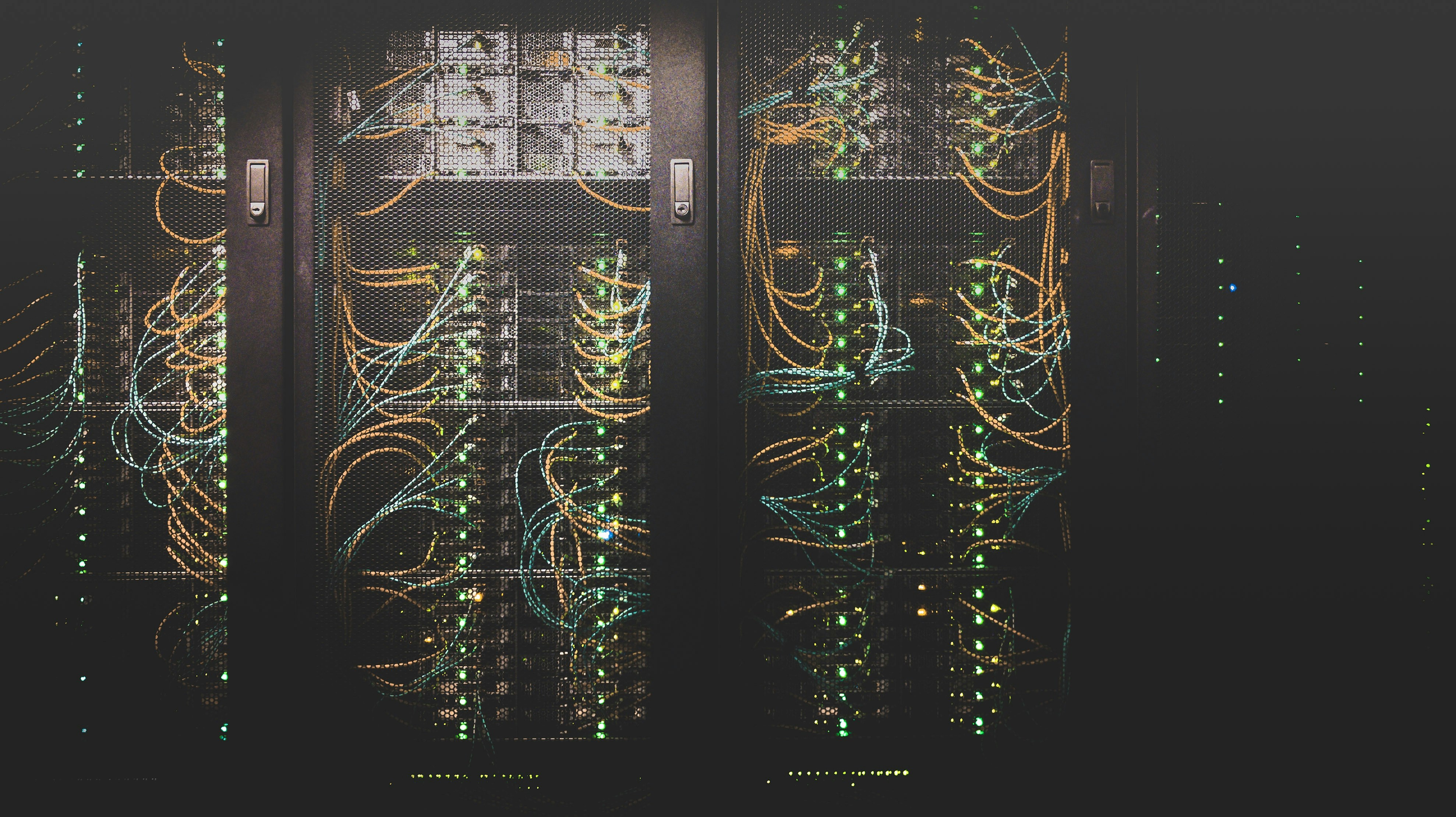

Building Plaza6G: New Infrastructure for 5G/6G Experimentation
Plaza6G is CTTC’s answer to a simple question: what kind of infrastructure do we need to test tomorrow’s mobile networks today? Over the last months, the project has expanded the existing EXTREME testbed into a multi-environment platform that combines large-scale computation, a highly controlled wireless lab, and a real private 5G deployment on the CTTC campus.
These upgrades lay the foundation for experimentation with 5G and future 6G technologies, open RAN concepts, AI-driven control, and advanced XR and IoT services.
At a Glance
| Infrastructure block | What it enables |
|---|---|
| EXTREME datacenter (upgraded) | Large-scale compute, storage, orchestration and monitoring for simulations, 5G cores, AI/XR workloads and repeatable multi-VM setups. |
| Multi-chamber anechoic Octobox lab | RF-isolated, repeatable wireless experiments with programmable attenuation to emulate controlled propagation/interference scenarios. |
| Integrated private 5G network (indoor + outdoor) | End-to-end trials with mobility, handovers, and realistic propagation across the CTTC campus while reusing the same cores and service logic. |
“Individually, each infrastructure is powerful. Together, they form a coherent multi-environment testbed—from lab-grade control to real-world deployment.”
1. A Stronger Core: the Upgraded EXTREME Datacenter
At the heart of Plaza6G sits the EXTREME datacenter, expanded to support demanding 5G/6G experimentation. New high-performance servers (including GPU-enabled nodes) extend existing compute racks into a unified pool for three experimental environments: simulation/emulation, controlled lab, and field trials.
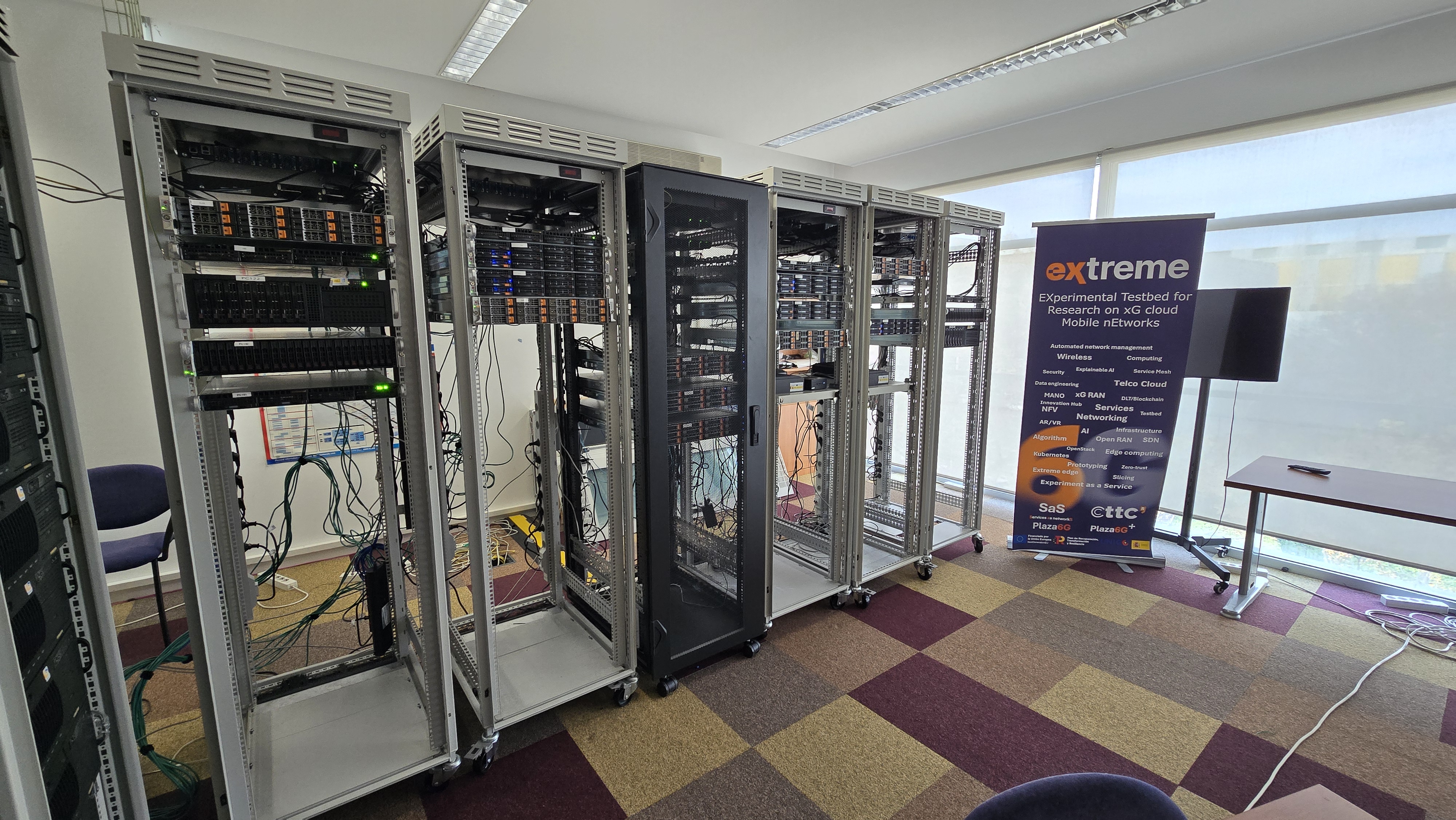
The virtualisation platform is based on OpenStack with a Ceph distributed storage backend, enabling on-demand provisioning of compute and networking resources and efficient handling of large datasets for AI/XR or trace-based experiments.
What the OpenStack + Ceph stack enables
- Provision virtual machines and network functions on demand.
- Attach workloads to isolated virtual networks mirroring complex 5G/6G topologies.
- Store and move large volumes of data needed by AI, XR, and trace-driven experimentation.
Integrated management stack
- Foreman + Puppet for automated OS installation and configuration across physical and virtual nodes.
- Terraform for describing complete test environments as code—create/reproduce/tear down multi-VM setups with a single command.
- Prometheus + Grafana for real-time metrics, dashboards, and alerting.
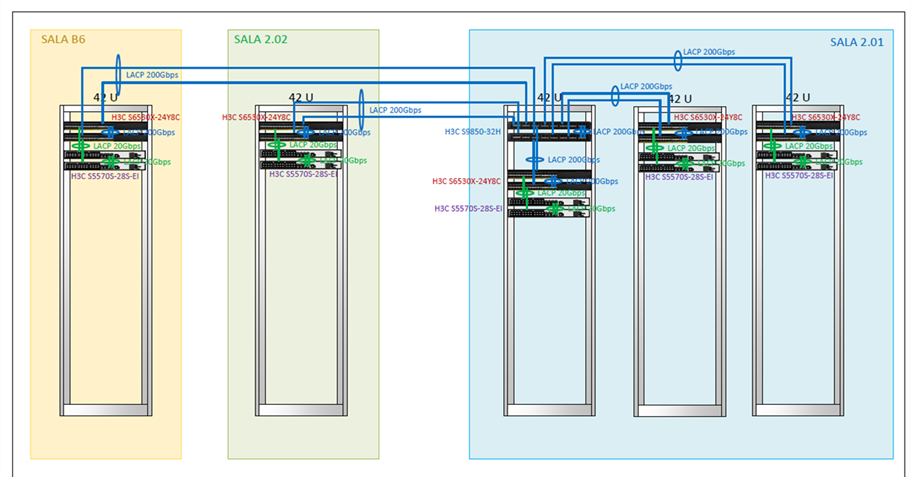
Practical takeaway: The upgraded datacenter is the engine room of Plaza6G—running simulations, hosting 5G cores and service backends, processing logs/traces, and enabling GPU-accelerated AI workloads for network control.
2. A Controlled Wireless Lab: the Multi-Chamber Anechoic Octobox
Plaza6G’s controlled laboratory includes a multi-chamber anechoic system composed of four rigid RF-isolated boxes interconnected through programmable attenuators. This allows experimentation under repeatable radio conditions while shielding tests from external interference.
Key characteristics
- High isolation (above ~90 dB below 7 GHz) to protect experiments from external signals.
- Support for sub-6 GHz and mmWave bands using MIMO and horn antennas.
- Filtered feed-throughs for power, Ethernet, and RF cabling for flexible setups with real devices.
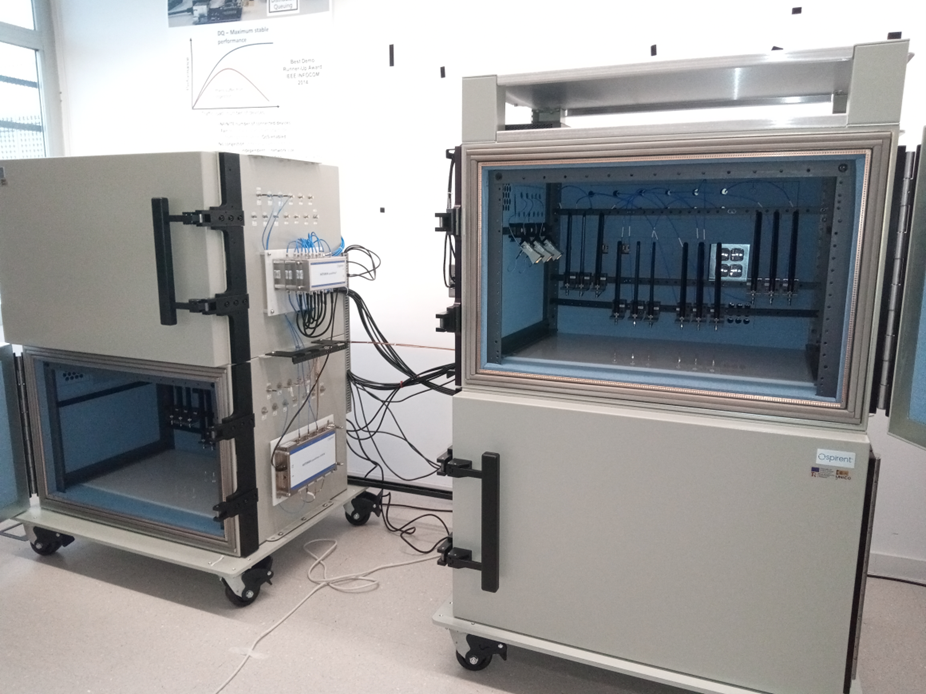
The chambers are connected via multiple independently controlled attenuation paths. By tuning attenuation remotely (web GUI or API), researchers can emulate a range of propagation conditions: strong line-of-sight links, heavily faded channels, controlled inter-chamber interference, or fully isolated scenarios.
Think of it as a “wind tunnel for radio”: place gNBs, UEs, Wi-Fi APs, or O-RAN components in different chambers and test algorithms like handover, PRB scheduling, or beam management under controlled, repeatable conditions.
3. An Integrated Private 5G Network: Indoor and Outdoor
Beyond the chambers, Plaza6G deploys a campus-wide private 5G network that combines an indoor system in the lab with an outdoor deployment on CTTC rooftops. Both share the same 5G cores and are integrated with the EXTREME datacenter hosting network functions and service workloads.
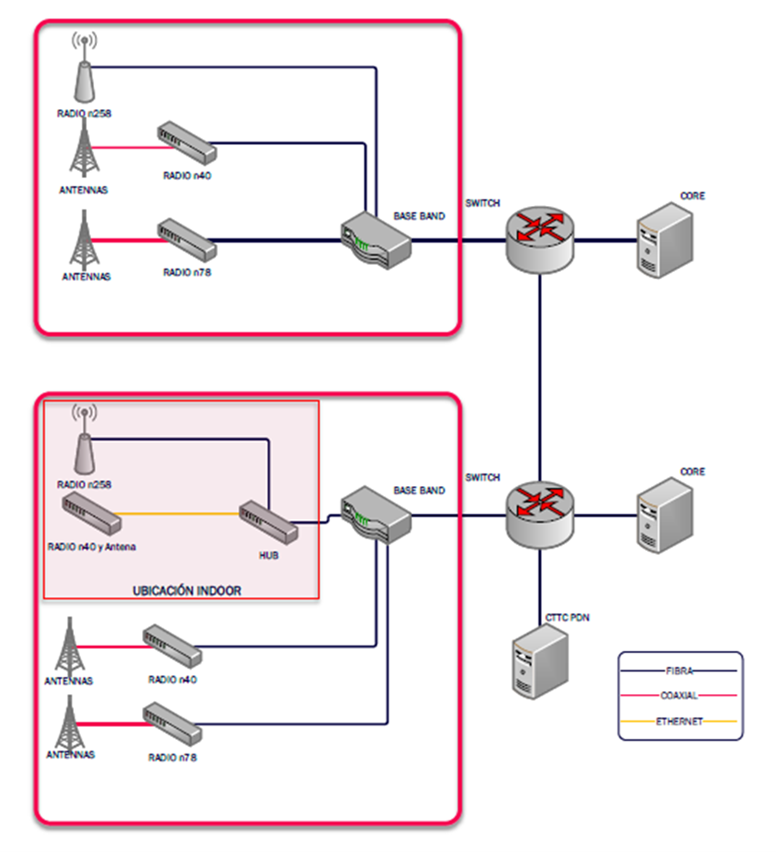
Indoor network: controlled device and service testing
- Operation in bands such as n40 (~2.3 GHz) and mmWave n258 to cover office/lab environments.
- Controlled experiments with commercial smartphones and XR/IoT devices.
- Network slicing, QoS policies, and traffic steering with full control of interference and mobility.
- Coupling radio experiments with edge computing workloads (XR rendering, AI inference) in the datacenter.
Outdoor network: realistic mobility and end-to-end trials
- Rooftop gNBs providing campus coverage in bands such as n40, n78, and n258.
- Mobility and handover experiments across buildings/open areas.
- Validation of connected vehicles, drones, and industrial IoT in realistic propagation conditions.
- End-to-end trials spanning outdoor RAN, transport network, and datacenter-hosted applications.
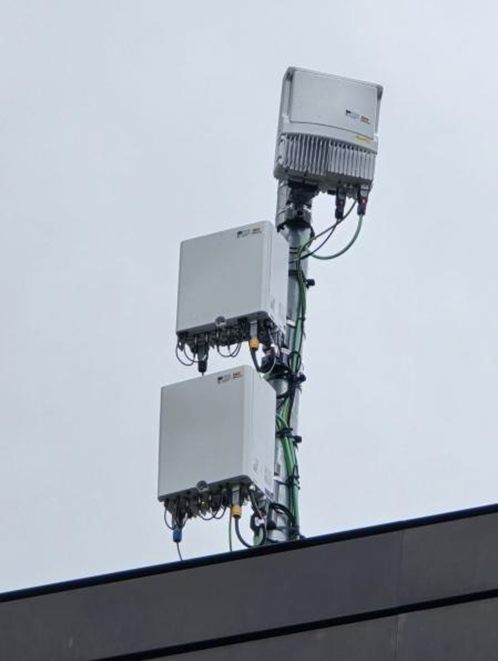
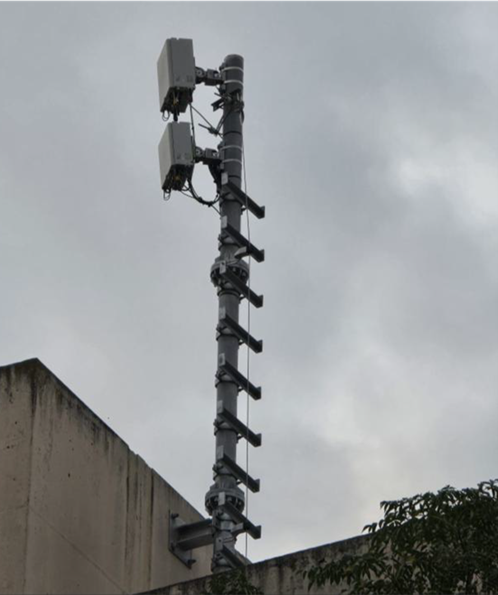
Because the indoor and outdoor segments belong to the same private 5G system, Plaza6G can run experiments that move seamlessly from lab to campus and back—reusing the same devices, cores, and service logic while observing performance changes from controlled to real-world conditions.
4. Putting It All Together: Multi-Environment Experimentation
Individually, each infrastructure block is powerful. Together, they form a coherent multi-environment testbed:
- EXTREME datacenter: compute, storage, orchestration, automation, monitoring.
- Anechoic Octobox: controlled RF sandbox for fine-grained experiments.
- Indoor–outdoor private 5G: bridge lab control with real deployment.
On top of this physical layer, Plaza6G is building a web-based experimentation framework and APIs to enable zero-touch requests—from simple VMs to full 5G network scenarios—reusable across research, industry collaborations, and training.
5. What’s Next: Plaza6G+
While this post focuses on the infrastructures delivered by Plaza6G, the evolution continues with Plaza6G+, extending the range and realism of experiments on top of the foundations described above.
Planned upgrades in Plaza6G+
- O-RAN-oriented validation environment: UE/O-RU emulator over O-RAN fronthaul, dedicated O-RAN hardware/software platform, additional indoor 5G test base stations and mmWave equipment.
- Extra compute/storage: additional GPU-enabled servers, general-purpose nodes, leaf/spine switches, and high-speed Wi-Fi 6 access points.
- TSN segment: SoC-e 1G TSN switches enabling deterministic Ethernet transport and joint 5G–TSN experimentation for industrial and mission-critical use cases.
- XR and sensing devices: XR headsets, 5G tablets/smartphones, motion-capture and IoT/energy devices, tightly coupled with the private 5G network.
Summary for Users
- A strengthened compute + storage backbone for repeatable 5G/6G experiments.
- A highly controlled RF lab for precise, reproducible wireless evaluations.
- An integrated indoor–outdoor private 5G network for realistic trials and mobility.
- A path forward with Plaza6G+ to expand O-RAN, TSN, compute, and XR/IoT capabilities.
Example Q&A
Q: What is the main purpose of the upgraded EXTREME datacenter?
A: It provides the compute, storage, orchestration, and monitoring backbone needed to run large-scale simulations, host 5G cores and services, process traces, and execute GPU-accelerated AI workloads.
Q: Why use a multi-chamber anechoic system?
A: It provides RF isolation and programmable attenuation so researchers can reproduce radio conditions (LOS, fading, interference) and evaluate algorithms under tightly controlled, repeatable setups.
Q: What’s the benefit of integrating indoor and outdoor private 5G?
A: It allows experiments to transition from lab-controlled conditions to real-world campus deployment while reusing the same devices, cores, and services—making performance comparisons across environments straightforward.